Forecasting
Dataset-driven tasks that start simply, then test whether the agent can carry intent, state, constraints, and intermediate results across many steps.
Benchmarks born from real failures
Stress tests for agents that need to work outside the demo.
We turn real-world agent mistakes into structured problem sets, exposing the moments where impressive models lose the plot: brittle planning, weak recovery, unreliable tools, and bad calls.
Why test cases
Our tests are designed to make hidden weaknesses visible. Each case starts with a real agent failure, then becomes a reproducible task with clear expectations, validators, and scoring notes.
Use Cases
Dataset-driven tasks that start simply, then test whether the agent can carry intent, state, constraints, and intermediate results across many steps.
Situations where the agent needs judgment: ask the missing question, reject the bad premise, and avoid rushing into a plausible but wrong answer.
Messy inputs with stale facts, corrected requirements, hidden dependencies, and conflicting context to see what the agent keeps, drops, or invents.
Uncertain tasks where tools misfire or evidence is incomplete, revealing whether the agent can verify, adapt, and recover without bluffing.
Method
We choose datasets and scenarios because failures in these workflows are costly. The point is not to make agents look bad; it is to find the gaps that matter before they show up in production.
We focus on data that reflects workflows where agent mistakes create real downstream cost.
We frame the task around who is using the data, what they need, and where the agent is likely to drift.
We vary constraints, context, tools, and ambiguity until the failure pattern becomes obvious.
When an agent fails, we capture the trace, conditions, outcome, and scoring signal.
Workflow
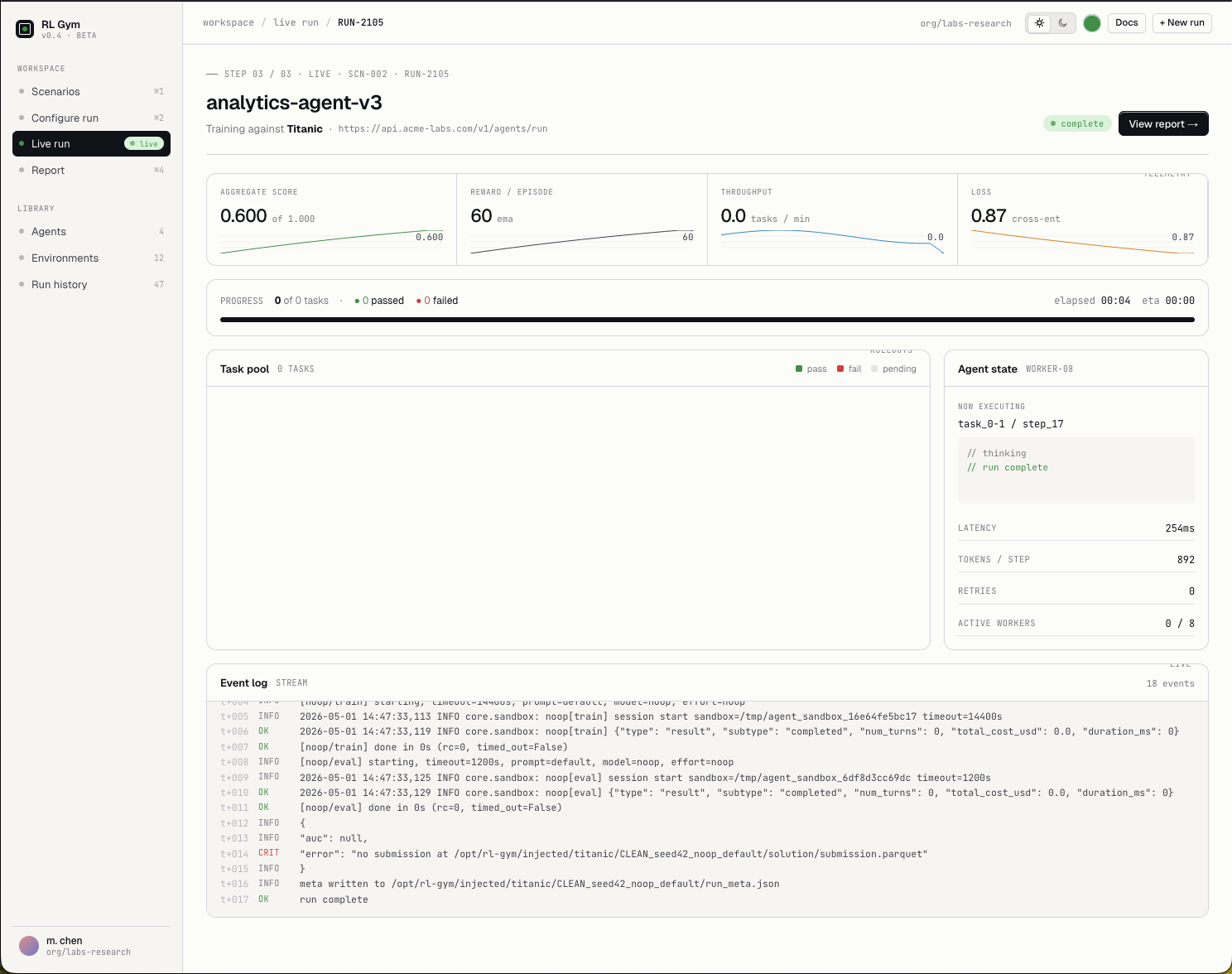
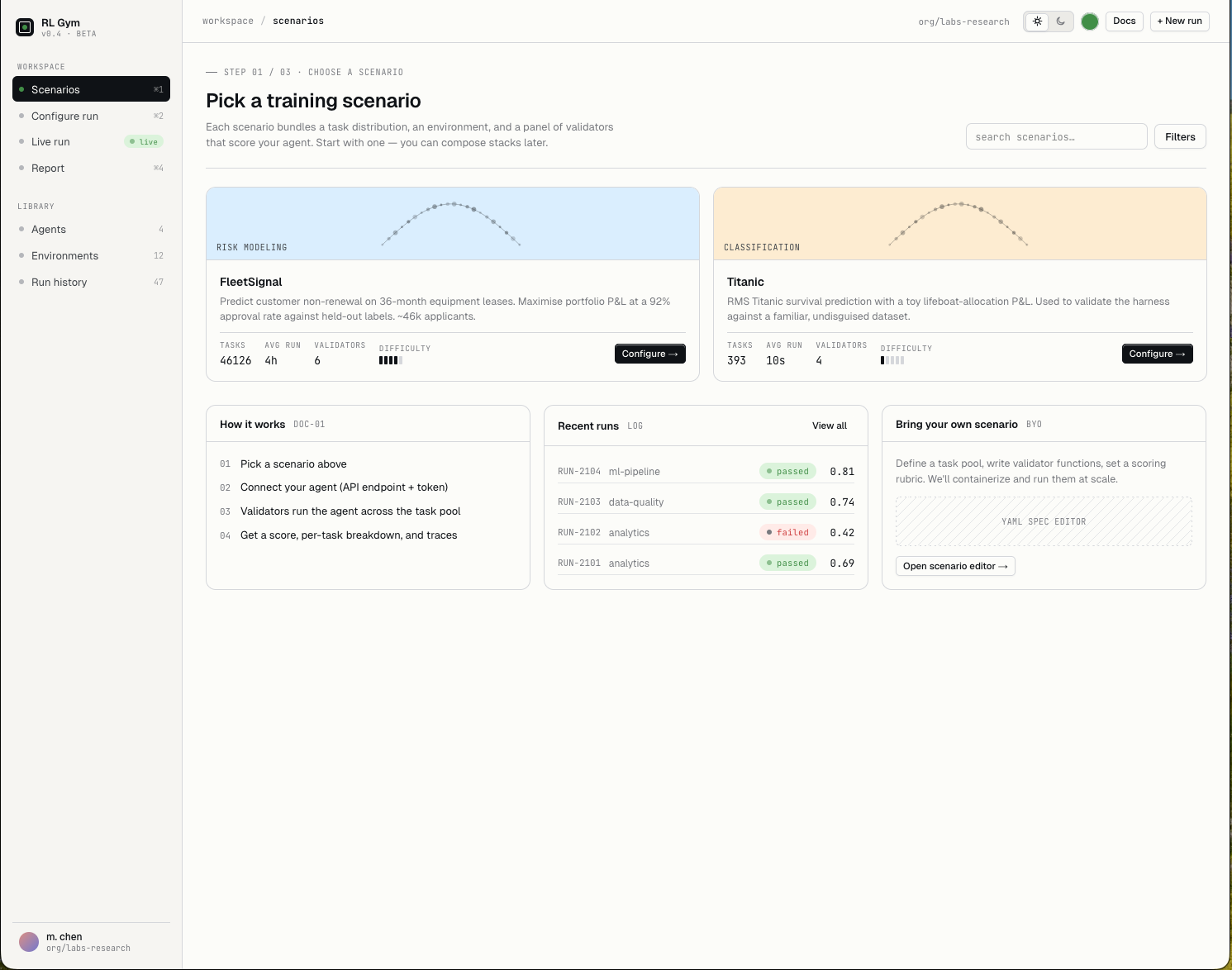
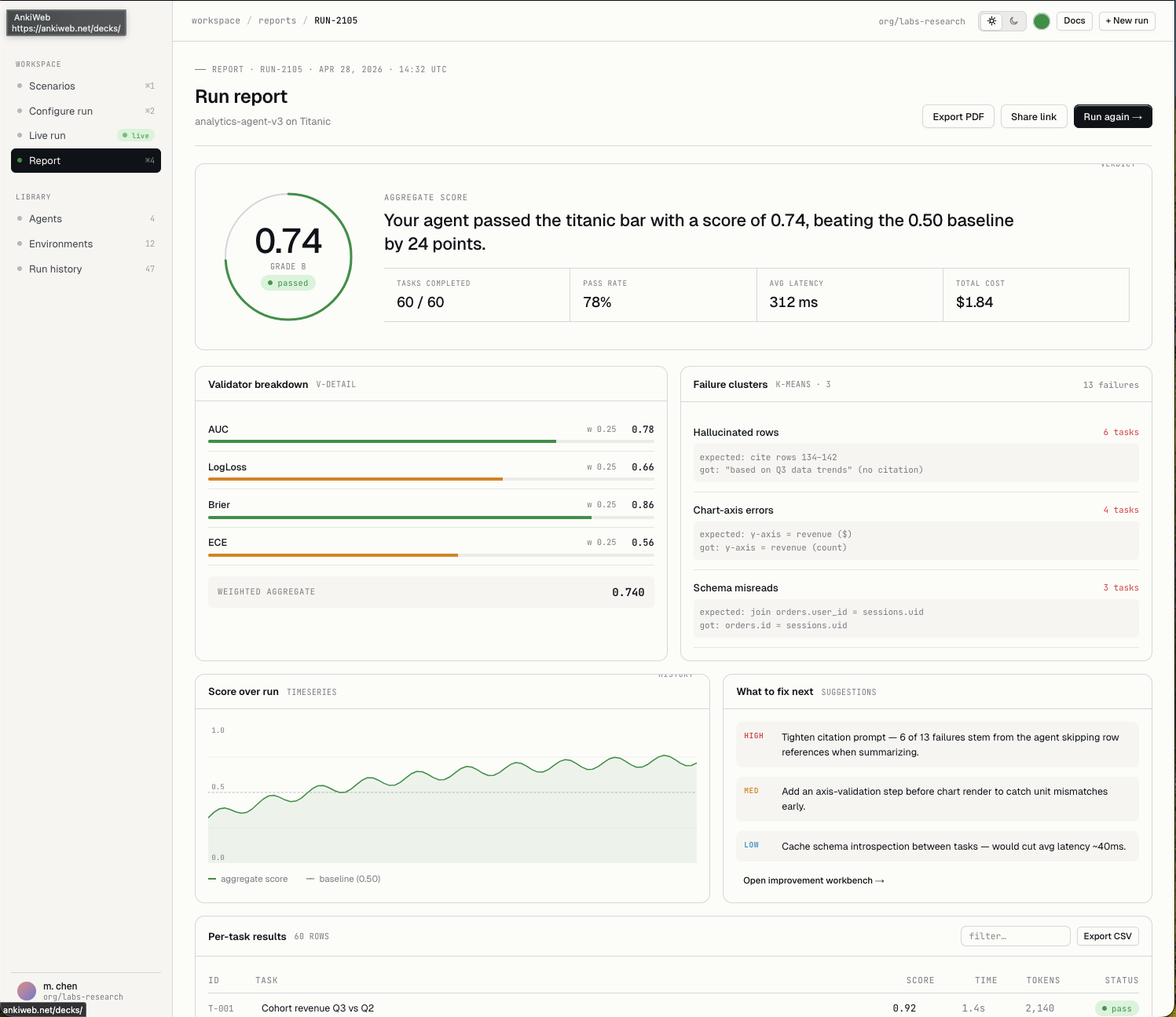
Every benchmark follows the same loop: choose the scenario, configure the agent, watch the execution, then review the scorecard for failure clusters, validator misses, and recovery quality.
Start from a real-world dataset scenario with a task pool, environment, and validators.
Connect your desired agent, set sampling and runtime limits, choose validators, and prepare the benchmark.
Observe the live task pool, event stream, retries, latency, and agent state as the model attempts the scenario.
Turn the run into scores, validator breakdowns, failure clusters, traces, and improvement signals.
Next step
Share the model, task, expected outcome, and the moment the agent went off track.